

AED Kits for Housing Societies and Apartment Complexes in India

Updated: Jul 24

Sudden cardiac emergencies can happen anywhere, including within housing societies and apartment complexes in India.
With more people living in high-rise buildings and gated communities, the risk of delayed medical response has increased.
Ambulances may take time to arrive due to traffic, distance, or access issues inside residential premises. During such emergencies, every minute becomes critical.
Automated External Defibrillators, commonly known as AEDs, are designed to provide immediate help during sudden cardiac arrest.
When placed inside residential complexes, AED kits allow residents and security staff to act quickly before professional medical help arrives.
This preparedness can significantly improve survival chances.
For housing societies in India, installing AED kits is a practical step toward community safety.
It reflects awareness, responsibility, and readiness to handle life-threatening situations.
Understanding the importance, placement, and maintenance of AED kits helps apartment communities create a safer living environment for all residents.
Understanding Sudden Cardiac Arrest in Residential Settings
Sudden cardiac arrest occurs when the heart suddenly stops beating effectively due to an electrical malfunction.
It is different from a heart attack and often happens without warning signs.
People of any age can be affected, including seemingly healthy adults living in apartment complexes.
In residential areas, cardiac emergencies often happen at home, during morning walks, or in common spaces.
Delayed response is common in housing societies due to lack of medical equipment on-site.
Without immediate defibrillation, survival chances decrease rapidly with each passing minute.
AEDs are designed to detect abnormal heart rhythms and deliver a controlled shock when needed.
Having AED kits in housing societies enables quick action before ambulance services arrive.
Why AED Kits Are Important for Housing Societies in India?
Sudden cardiac arrest can occur at any time, including early mornings, nights, or during community activities.
Ambulance response times in Indian cities and towns may be delayed due to traffic or distance.
AED kits allow immediate life-saving action within the society premises.
Early defibrillation significantly increases survival chances during cardiac emergencies.
Housing societies often have elderly residents who are at higher risk of cardiac events.
Large apartment complexes have many residents, increasing the likelihood of medical emergencies.
AED kits support security staff and residents in responding confidently during emergencies.
Installing AEDs shows a proactive approach to community health and safety.
Key Components of an AED Kit for Residential Use
AED Device: The core life-saving unit that checks the heart rhythm and delivers an electric shock only when needed. It is designed for use by non-medical people.
Adult AED Pads: These adhesive pads are placed on the chest to allow the AED to monitor the heart and deliver therapy. They should be clearly labeled and easy to apply.
Battery Pack: A long-life battery ensures the AED remains ready for use at all times, even during power outages common in some areas.
CPR Mask or Face Shield: Helps provide safe rescue breaths while reducing direct contact during CPR.
Clear Instruction Guide: Simple visual and written instructions help residents or security staff act quickly without confusion.
Carrying Case or Wall Cabinet: Protects the AED from dust and damage while keeping it visible and accessible in an emergency.
Readiness Indicator: A visual status light or display confirms that the AED is functioning properly and ready for use.
Basic Safety Accessories: Items such as gloves and scissors support safe and efficient emergency response.
Placement of AED Kits in Housing Societies

Proper placement of AED kits in apartment complexes is crucial to ensure quick and effective response during emergencies.
Accessible Locations: AEDs should be installed in easily visible and reachable areas, such as the main entrance, lobby, or near the security office, where residents and staff can quickly locate them.
Multiple Units for Large Complexes: In large housing societies, it is advisable to have AEDs on different floors or in separate blocks to minimize response time.
Quick Retrieval: The device should be positioned so that it can be accessed and brought to the emergency site within a few minutes from any part of the society.
Clear Signage: Cabinets or AED storage areas must have clear, visible signs so anyone in the community can identify them immediately.
Unrestricted Access: AEDs should not be locked in a way that delays access; ease of access is essential during life-threatening situations.
Protection and Safety: Place AEDs away from direct sunlight, moisture, and dust to maintain their functionality and longevity.
Properly placed AED kits ensure that residents and security personnel can respond efficiently, reducing panic and improving the chances of survival during sudden cardiac arrests.
Importance of Training Residents and Society Staff
CPR and AED Knowledge: All residents, security personnel, and maintenance staff should be trained in CPR and AED use to respond confidently during emergencies.
Regular Training Sessions: Conduct training at least once a year, with refresher courses every 6–12 months to maintain skills and awareness.
Hands-On Practice: Practical exercises with training AEDs help staff and volunteers become familiar with device operation, pad placement, and emergency protocols.
Reducing Response Time: Trained individuals act quickly, which significantly improves survival rates in sudden cardiac arrest cases.
Student or Resident Awareness: Older children and adult residents can be educated about AED locations and basic usage, helping them alert staff immediately if needed.
Emergency Drills: Integrating AED use in routine emergency drills ensures that the community is prepared for real-life scenarios.
Proper training ensures that the AED kits installed in housing societies are not just available but effectively utilized during critical emergencies.
Maintenance and Readiness of AED Kits

Regular Visual Checks: Inspect AEDs at least once a month to ensure the readiness indicator shows the device is operational.
Pad and Battery Expiry: Check expiration dates on both pads and batteries, replacing them promptly to avoid device failure during emergencies.
Proper Storage: Keep AEDs in clean, dry areas protected from direct sunlight, dust, and extreme temperatures to maintain device functionality.
Post-Use Inspection: After each use, replace pads and check battery levels before returning the AED to its designated spot.
Documentation: Maintain a log of all inspections, replacements, and maintenance activities for accountability and audit purposes.
Backup Supplies: Keep spare pads and batteries readily available to ensure uninterrupted readiness, especially in high-occupancy apartments.
Consistent maintenance ensures that AED kits in housing societies remain fully functional, ready to save lives when every second counts.
Best AEDs for Housing Societies
Mediana Hearton AED A16 – ₹99,000
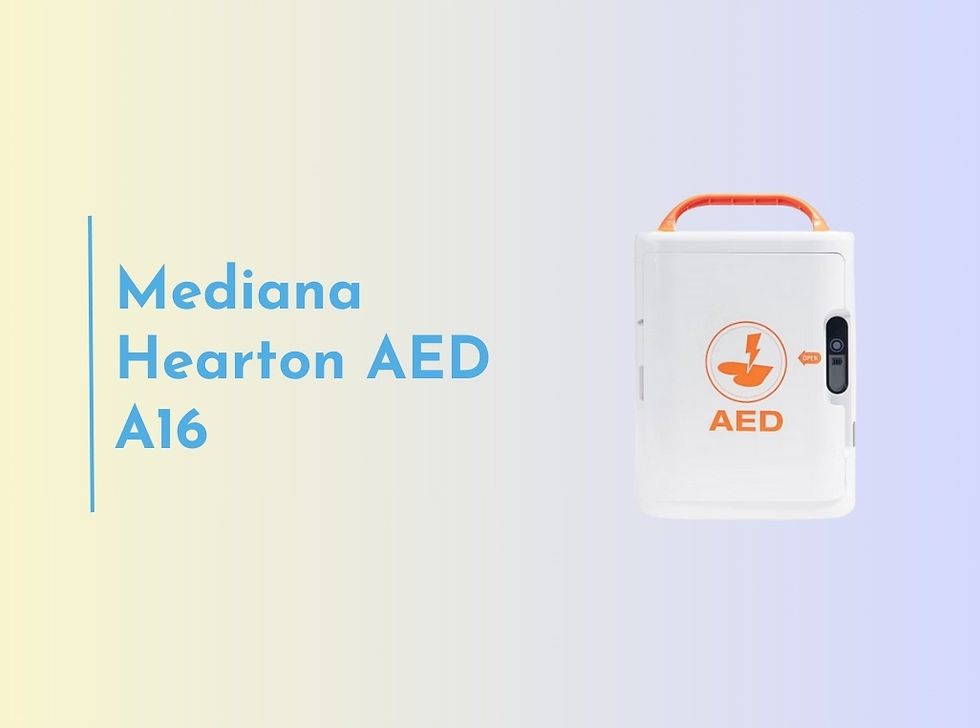
The Mediana Hearton AED A16 is a reliable, semi-automatic AED suitable for residential settings.
It includes a protective cover, a language selection button, and an adult/pediatric mode switch.
The indicator light and infrared port ensure readiness and easy data transfer. Pads connect securely to the device, and the shock button flashes when ready, allowing fast response during emergencies.
Free shipping and a 5-year warranty are included.
Defibtech Lifeline Auto AED-DDU-120A – ₹135,001 (Regular ₹225,000)

Defibtech Lifeline Auto AED-DDU-120A is a fully automatic AED designed for rapid response.
Delivers 150J for adults and 50J for children, with a 4-second charge time.
Features extensive voice prompts, CPR pacing, and status indicators for pads, shock, and analysis. Built-in AHA/ERC protocols ensure correct operation. Free shipping and a 5-year warranty are included.
Philips HeartStart HS1 Onsite AED-M5066A – ₹99,999 (Regular ₹195,000)

Lightweight and intuitive, the Philips HS1 Onsite AED is perfect for residential areas. Provides clear voice instructions and fast setup.
Can be used without a prescription; suitable for adults and children. Designed for easy, confident use during emergencies with robust durability.
Comes with free shipping and a 5-year warranty.
Philips HeartStart FRx AED-861304 – ₹120,000 (Regular ₹225,000)

The Philips FRx AED is rugged and reliable, designed for harsh environments.
Can withstand drops, dust, and water, making it ideal for apartment common areas.
Easy-to-use voice guidance and pediatric capability ensure safety for all residents. Free shipping and a 5-year warranty are included.
Zoll AED Pro-90110 – ₹264,575

Zoll AED Pro-90110 is an advanced defibrillator for residential and professional use.
Provides real-time CPR feedback, guiding compression depth and rate.
Pre-connected pads simplify placement, ensuring quick deployment. Built to be durable and reliable in emergencies. Free shipping included.
AED Consumables for Housing Societies
To keep AEDs in housing societies and apartment complexes fully operational, it is essential to regularly replace consumables like batteries and electrode pads.
Using genuine, brand-approved consumables ensures the device works reliably during emergencies, maintains warranty coverage, and delivers safe, effective defibrillation for both adults and children.
Buy AED India offers a wide range of authentic AED consumables suitable for all major AED brands.
ZOLL AED Plus Replacement Batteries (Pack of 10), 20 Ah – ₹14,000
Philips HeartStart M5070A Battery– ₹14,999
Defibtech Standard DBP-1400 Battery – ₹40,000
Philips FRX SmartPads II – ₹6,200.00
Cardiac Science G5 Battery-XBTAED001A – ₹60,000 (Regular ₹70,000)
Defibtech Battery DBP2800 – ₹49,000 (Regular ₹53,100)
Why Shop AED Kits from Buy AED India?

High-Quality Products: Buy AED India offers genuine, brand-approved AED devices and accessories, ensuring reliable performance in emergencies.
Wide Range of Options: Customers can choose from leading global brands like Philips, Zoll, Defibtech, Mediana, and Heartplus, suitable for residential settings.
Compliance with Indian Standards: All AED kits are approved and suitable for use in Indian housing societies, meeting local safety and regulatory requirements.
Expert Guidance: The platform provides clear information on pad compatibility, battery types, and AED features, helping buyers make informed choices.
Fast Delivery Across India: Nationwide shipping ensures timely access to life-saving equipment, even in remote residential communities.
After-Sales Support: Buy AED India offers customer support for installation guidance, maintenance queries, and replacements, ensuring ongoing device readiness.
Transparent Pricing: Clear product descriptions, prices, and warranty information help buyers choose AED kits without confusion.
Ease of Use for Residents: The website organizes AED kits and accessories clearly, making it simple for housing societies to select the right devices for their community.
Conclusion
Placing Automated External Defibrillator (AEDs) in housing societies and apartment complexes in India and maintaining these devices is an important action on the way to ensuring the safety of residents.
Considering that people live together in close quarters and always socialize, time-saving during unexpected cardiac arrest can be achieved through the presence of an AED.
Selecting an appropriate AED model, selecting and maintaining good standards of batteries and pads, and finally providing simple training to staff or residents makes them ready in case of emergencies.
Buy AED India makes it easy through the availability of quality AEDs and consumables as well as professional assistance in choosing the appropriate products.
Periodic inspections, storage, and timely replacement of expired consumables ensure that the AED is reliable when one needs it.
FAQs
Why are AEDs important in housing societies?
AEDs provide immediate life-saving intervention during sudden cardiac arrest, increasing survival chances.
How often should AED pads be replaced?
Pads should be replaced every 2–5 years or immediately after use.
How often should AED batteries be replaced?
Batteries typically last 4–7 years or must be replaced after any emergency use.
Can AEDs be used for children?
Yes, pediatric pads or child-mode settings ensure safe energy delivery for children.
Where can I buy genuine AEDs and consumables in India?
Buy AED India provides certified AEDs, batteries, and pads for all major brands.
Do AEDs require training to be used?
Basic CPR and AED training is recommended to ensure fast and correct use.
What happens if I use expired pads or batteries?
Expired components may fail to deliver shocks or provide inaccurate readings, reducing effectiveness.
Can residents be trained to use AEDs?
Yes, residents can be trained in simple AED operations and CPR for emergency preparedness.


Comments