

Defibrillation Pads Placement Guide

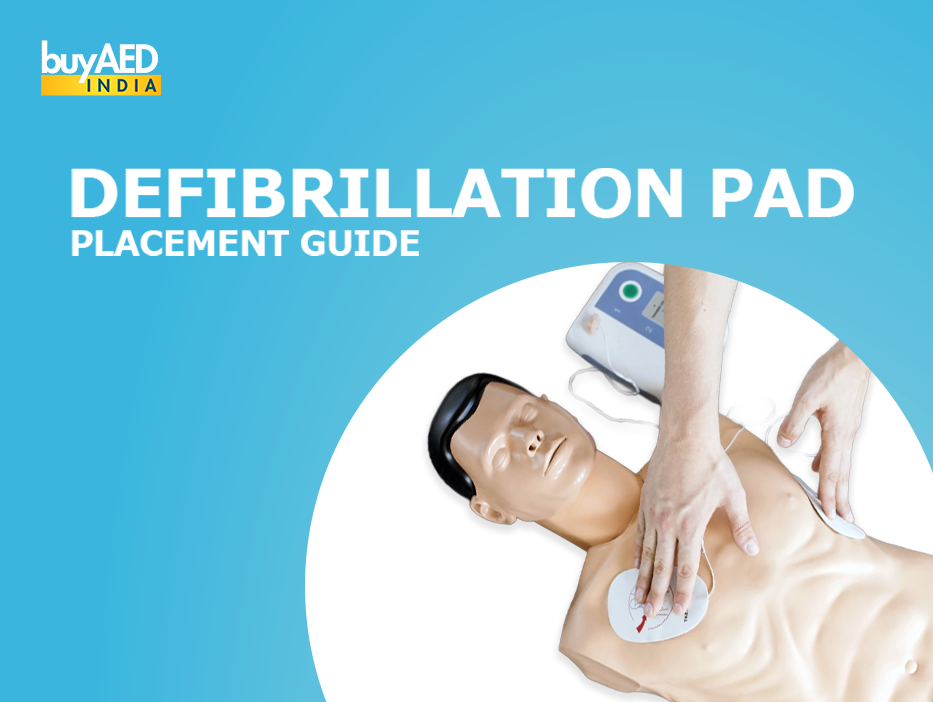
In case of a cardiac emergency, every second matters.
If a person has a sudden cardiac arrest, the heart ceases to pump blood efficiently, and the individual might fall at any moment.
An Automated External Defibrillator (AED) can be used to save lives in these situations by delivering a controlled electric shock to the patient to help them get their heartbeat back to normal.
However, defibrillator pads should be properly placed on the chest of the patient to make an AED effective.
These sticky pads enable the AED to analyse the heart's rhythm and deliver a life-saving shock if needed.
Although voice instructions are available in modern AED devices, knowing how to position the pads correctly can make the responders more confident in their actions during emergencies.
This guide will describe how defibrillation pads work, where they are to be put and the tips that one needs to keep in mind during the use of the defibrillators.
What Are Defibrillation Pads?
Defibrillation pads are electrode pads that are adhesive and which connects the body of the patient to the defibrillator or AED machine.
These pads serve two main purposes:
• They detect the heart’s electrical rhythm
• They deliver an electrical shock to the heart when needed
Most AEDs have pre-connected pads that have diagrams on the correct locations to place it on the chest. The adhesive design is such that they are fixed during treatment.
Pads are made to pass electrical energy through the chest safely to allow the defibrillator to reset the heart rhythm.
Why is Correct Pad Placement Necessary?

The location of the pads is important as it would make sure that the electrical shock is passed through the heart muscle in the most efficient manner.
If the pads are placed incorrectly:
The AED can fail to analyse the rhythm.
The shock may not reach the heart effectively.
The chances of restoring a normal rhythm may decrease.
Proper placement helps the electrical current travel across the heart, increasing the chances of successful defibrillation.
Pad Placement for Standard Defibrillation

The most widespread method used with AED devices is known as Anterior-Lateral Placement.
This is the placement most people see illustrated directly on AED pads.
Step 1: Place the first pad on the upper right chest
The first pad should be placed:
Just below the right collarbone
On the upper right side of the chest
Close to the breastbone
This pad is often called the sternal pad.
Step 2: Place the second pad on the lower left chest
The second pad should be placed:
On the left side of the chest
A few inches below the armpit
Along the rib cage
This pad is sometimes called the apex pad.
When placed correctly, the pads create a pathway for electrical current to pass across the heart.
What Could Happen When the Pads are not in the right position?
The modern AEDs are made to guide the user through the steps, and most of them have diagrams on the pads.
However, if pads are too close together or placed in the wrong position, the electrical pathway may not effectively pass through the heart muscle.
During an emergency, responders should quickly check that:
Pads are placed exactly as shown on the diagram
Pads are not touching each other
Pads are fully attached to the skin
Pads may be repositioned in case of necessity, and then the shock can be delivered.
Special Cases to be taken into consideration
Although normal placement suits most cases, there are a few special cases where one might have to adjust.
1. If the chest is wet
Water can interfere with the adhesive and electrical conduction.
Before placing pads:
Dry the chest quickly with a cloth
Ensure pads stick properly
2. If the patient has a pacemaker or implant
Pacemakers usually appear as a small bump under the skin near the collarbone.
Pads should be placed at least one inch away from the device.
3. If the patient is a child
For children, special paediatric AED pads should be used if available.
Some AED devices automatically adjust shock levels when paediatric pads are connected.
Can Anyone Use an AED?

One of the most important advantages of modern AED devices is that they are designed for both trained and untrained responders.
Most AED machines provide:
Clear voice instructions
Visual diagrams for pad placement
Automatic analysis of heart rhythm
Instructions on how to proceed in the emergency.
The device will only provide a shock when it senses a shockable rhythm, so it is safe to be used by the general population.
This is why AED devices are increasingly being installed in locations such as offices, airports, schools, shopping malls, gyms, and hotels.
The Significance of AEDs Nearby
Sudden cardiac arrest may occur at any place and is usually unexpected. Medical experts point out that early defibrillation is highly beneficial in increasing survival rate.
Emergency services can take several minutes to reach the site in most instances. The presence of an AED enables the immediate response of the bystanders.
For workplaces and institutions, installing AED machines is becoming an essential part of emergency preparedness.
Reliable suppliers such as Buy AED India provide certified defibrillators, pads, and accessories designed to support quick response during cardiac emergencies.
Access to the right equipment ensures organizations are better prepared to handle unexpected situations.
Maintaining Defibrillation Pads

Defibrillation pads are disposable medical products and must be kept in good condition.
Important maintenance tips include:
Check expiration dates regularly
Ensure pads are sealed properly
Replace pads after use
Store them with the AED device for quick access
Expired pads may lose their adhesive quality or conductivity, which can affect performance during emergencies.
Organizations that keep AED devices onsite often maintain replacement pads and batteries to ensure the equipment is always ready.
Providers like Buy AED India also supply AED accessories such as replacement pads, batteries, and maintenance support to help organizations keep their devices emergency ready.
Why should you always be prepared?
Even healthy individuals may experience cardiac emergencies without any previous warning.
Being prepared means:
Understanding how to identify sudden cardiac arrest
Starting CPR immediately
Using an AED as soon as it becomes available
The right placement of defibrillation pads is a tiny yet significant procedure that can save a life.
Awareness and access to reliable equipment can make a meaningful difference in emergencies.
Conclusion
Defibrillation pads placement has been found to be very important in lifesaving situations by restoring a normal heart rhythm in case of sudden cardiac arrest.
Though the current AED devices assist the user with the procedure, knowing where and how to position the pads can enable the responders to be more confident in case of an emergency.
The standard position is placing one pad on the upper right chest and the other on the lower left side of the chest, which allows the flow of electrical current to pass through the heart well.
Also, it is important to pay attention to details like dry skin, not using pacemakers, and using paediatric pads when needed to enhance the effectiveness of defibrillation.
With the increasing levels of awareness of sudden cardiac arrest, more organizations are recognizing the need to have AED devices within their reach.
Availability of quality defibrillators and accessories by credible suppliers such as Buy AED India can help to make sure that life-saving devices are accessible when they are most needed.
Safety is enhanced by preparedness, knowledge, and the right tools to ensure that in situations where immediate response can make the difference between life and loss.
Frequently Asked Questions
1. Where should defibrillation pads be placed?
One pad should be placed on the upper right side of the chest below the collarbone, and the other on the lower left side of the chest below the armpit.
2. Can AED pads be placed on clothing?
No. Pads should always be placed directly on bare skin.
3. What happens if AED pads are placed incorrectly?
Incorrect placement may reduce the effectiveness of the electrical shock and prevent proper rhythm analysis.
4. Can AED pads be used more than once?
No. Defibrillation pads are designed for single use only.
5. Do children need different AED pads?
Yes. Paediatric AED pads are recommended for children to deliver a lower energy shock.
6. Where can AED pads and defibrillators be purchased?
Medical equipment suppliers such as Buy AED India offer certified defibrillators, AED pads, and related accessories for workplaces, healthcare facilities, and public spaces.


Comments