

How to Replace AED Pads? (A Step-by-Step Guide for Popular Models)


AED pads play a crucial role in every defibrillation attempt because they deliver the shock that can restart a normal heart rhythm during sudden cardiac arrest.
Even if the defibrillator (AED) unit is functioning perfectly, expired, dried-out, or damaged pads can make the device fail at the exact moment it is needed.
In India, where temperatures often rise above recommended storage ranges, pads can degrade even faster, making timely replacement essential.
Most AED pads come with a shelf life of two to five years depending on the model.
Once expired, the adhesive weakens, the gel dries up, and the sensors inside the pads may stop detecting heart rhythm signals properly.
If that happens, the defibrillator (AED) will not deliver a shock, and the patient’s chance of survival drops significantly.
Knowing how to replace AED pads correctly ensures the device stays ready at all times and that your staff can respond confidently during emergencies.
This guide covers simple, clear steps for replacing pads on the most used AED brands in India.
General Steps to Replace Any AED Pads
Turn off the defibrillator (AED) before removing old pads to avoid accidental alerts or errors.
Gently peel off the used or expired pads from the AED’s connector port without pulling the cable forcefully.
Take the new pads out of their sealed package only when you are ready to install them to avoid contamination.
Plug the new pad connector firmly into the AED’s designated port until it clicks or locks in place.
Place the pads back into the AED’s storage compartment or carry case in the correct orientation shown on the packaging.
Check the AED’s indicator light to ensure the unit shows a “ready” or “green” status after pad replacement.
Record the new pads’ expiry date in your defibrillator (AED) maintenance log for regular monitoring.
How to Replace AED Pads for Popular Models in India?
Philips HeartStart HS1x
- Open the pad cartridge compartment and remove the old cartridge completely.
- Insert the new Philips pad cartridge until it clicks securely into place.
- Ensure the cartridge label faces outward, and the seal remains unbroken until use.
- Confirm the AED shows a green “ready” light after installation.
Zoll AED Plus / Zoll AED 3
- Unplug the old pad cable from the top connector port.
- Remove the old CPR-D pad or universal electrode set from the case.
- Attach the new Zoll pads and plug the connector firmly until locked.
- Make sure the CPR sensor (if applicable) is centered and unused before closing the lid.
Cardiac Science Replacement Pads
- Pull out the old Intellisense pads by disconnecting the cable from the right-side port.
- Connect the new pads firmly; Powerheart AEDs will beep if the connection is incomplete.
- Place the pads flat in the pad compartment without bending the gel area.
- Verify the AED status indicator shows “rescue ready.”
Defibtech Lifeline / Lifeline View
- Detach the old pad cable from the AED’s front-facing connector.
- Insert the new adult or pediatric pad cable into the same port until it clicks.
- Store the pads correctly along the AED’s molded pad compartment to avoid creasing.
- Check that the AED performs its self-test without errors.
Mistakes to Avoid When Replacing AED Pads
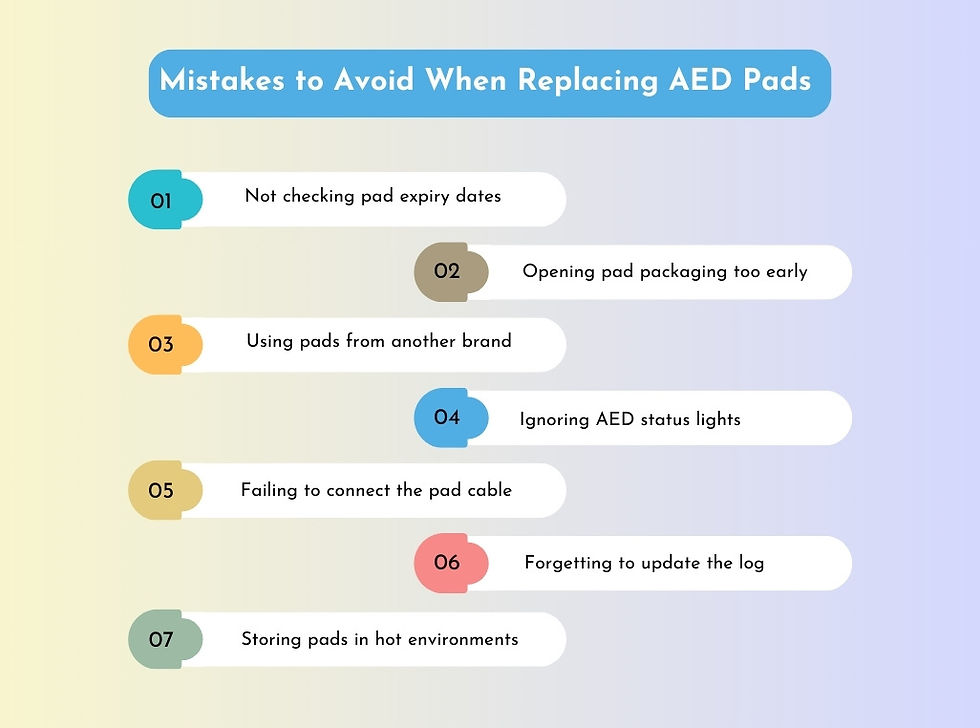
Not checking pad expiry dates: Expired pads may not stick properly, making the AED unusable during a cardiac emergency.
Using pads from another brand: AED pads are not interchangeable; each model requires its own compatible electrode set.
Failing to connect the pad cable securely: A loose connector can cause the AED to show a “not ready” or error status.
Storing pads in hot or humid environments: Heat damages the gel adhesive and shortens pad life.
Opening pad packaging too early: Once opened, pads dry out and become ineffective; always keep them sealed until needed.
Ignoring AED status lights: A red or blinking error light often means pads are missing, expired, or improperly connected.
Forgetting to update the maintenance log: Recording pad replacement dates helps ensure timely future replacements.
AED Pad Types and Brand-Specific Instructions
Philips AED Pads:
Includes HeartStart HS1 and FRx pad cartridges, available in adult and pediatric versions. These pads are designed for easy installation, with clear labels showing correct orientation. Users should always check the AED status light after installation to ensure readiness.
Zoll AED Pads:
Includes CPR-D Padz and CPR Uni-Padz, suitable for adult and pediatric patients. These pads provide accurate shock delivery and, in some models, CPR feedback. Ensure connectors are securely attached, and pads are stored without folding or damaging the adhesive gel.
Cardiac Science AED Pads:
Includes Powerheart G3 and G5 pad sets for adults and children. Intellisense technology ensures the pads communicate correctly with the AED. Store pads according to the diagrams inside the device to maintain readiness.
Defibtech AED Pads:
Includes Lifeline and Lifeline View adult and pediatric pads. These pads often have visual prompts or icons to guide proper placement. Always verify that the AED passes its self-test after replacing the pads.
Always use genuine pads, check expiry dates, keep them sealed until use, and perform monthly AED inspections to ensure the pads are functional.
When Should You Replace AED Pads?
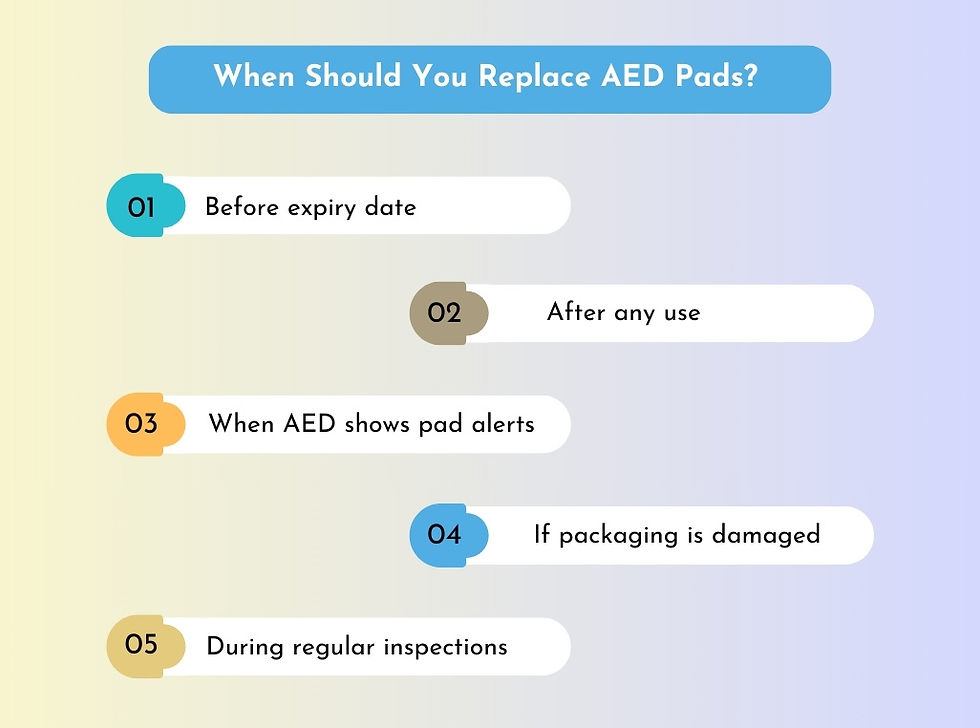
AED pads should always be replaced before their expiry date, which is printed on the packaging and usually ranges from two to five years depending on the model.
Pads must be replaced immediately after any use, even if only a single shock was delivered during an emergency.
If the AED displays a “Pad Expired” or “Replace Electrode” alert, the pads should be swapped out without delay.
Pads should be replaced if the packaging is torn, unsealed, or damaged, as this can compromise both adhesive performance and sensor functionality.
Regular monthly inspections of the AED, including checking the pads, ensure that the device remains fully operational and ready for use.
Where to Buy Genuine AED Pads in India?
The safest and most reliable way to purchase AED pads in India is through authorized suppliers like Buy AED India, which ensures that all products are authentic, meet international safety standards, and function correctly during emergencies.
Buy AED India provides electrode pads for all major AED brands, including Philips Zoll AED Plus , Cardiac Science, and Defibtech Lifeline, making it a one-stop solution for organizations with multiple AED models.
Purchasing from Buy AED India helps maintain warranty validity, as using unauthorized or generic pads can void the manufacturer’s warranty and reduce the AED’s effectiveness when needed most.
The platform also offers replacement batteries, training pads, and maintenance accessories, allowing businesses, schools, gyms, and hospitals to keep their AEDs fully operational at all times.
Online ordering is convenient and secure, with options for nationwide delivery, priority shipping for urgent replacements, and guidance from experts on selecting the right pads and accessories for your defibrillator (AED) models.
By choosing Buy AED India, organizations gain access to technical support, installation guidance, and advice on AED maintenance, ensuring that both the device and staff are prepared for real-life emergencies.
Buy AED India Products: Pads and Batteries
AED Pads from Buy AED India
Physio-Control CR PLUS AED Pads = ₹18,900
High-quality replacement pads for Philips and compatible AED models, ensuring reliable shock delivery during emergencies.
Specially designed pediatric pads for use with Defibtech AEDs, safe for children under 8 years or 25 kg.
Zoll Stat-Padz® II Electrode, Single – 8900-0801-01 = ₹8,500 (Regular ₹10,000)
Reliable adult electrode pads for Zoll AED units, ideal for offices, schools, and public areas.
Universal adult pads are compatible with Zoll AED models, providing accurate rhythm analysis and shock delivery.
Zoll CPR-D-PADZ – 8900080001 = ₹28,200
High-quality CPR feedback pads for Zoll AED Plus, helping users perform effective compressions during emergencies.
Other very Important AED Consumables from Buy AED India
Philips FRX HS1 Battery – M5070A – ₹19,470
Replacement battery for Philips FRx and HS1 models, long-lasting and reliable for Indian conditions.
High-capacity battery compatible with Philips FR3 AEDs, ensuring uninterrupted device readiness.
Defibtech Standard DBP-1400 Battery – ₹40,000
Reliable replacement battery for Defibtech Lifeline AEDs, designed for durability and consistent performance.
Cardiac Science G5 Battery – XBTAED001A – ₹60,000 (Regular ₹70,000, Expiry: 2032/09/30)
Long-lasting battery for the Cardiac Science Powerheart G5 AED, ensuring the device is always ready.
Defibtech Battery DBP2800 – ₹49,000 (Regular ₹53,100)
Replacement battery for Lifeline View AEDs, designed for fast installation and reliable operation.
Replacement battery for Cardiac Science G3 AEDs, providing consistent performance in emergencies.
Conclusion
Ensuring that your defibrillator (AED) is always ready to use is a matter of life and death, and the proper replacement of AED pads and batteries is crucial for safety.
Expired or damaged pads can prevent the device from delivering the crucial shock needed during sudden cardiac arrest, while worn-out batteries can lead to device failure at the most critical moment.
By sourcing genuine defibrillator (AED) products from trusted suppliers like Buy AED India, organizations can maintain compliance with safety standards and ensure reliable operation.
Regular inspections, proper storage, and timely replacement of pads and batteries help extend the AED’s lifespan and give employees, staff, and visitors confidence that help is available immediately if needed.
Investing in high-quality AED machines, replacement pads, and batteries is not just a legal or procedural requirement but a moral responsibility for every business, school, hospital, or public space.
Prioritizing AED maintenance and readiness is a simple yet highly effective way to protect lives and create a safer environment.
FAQs
How often should AED pads be replaced?
AED pads should be replaced before their expiry date or immediately after use.
Can I use pads from a different AED brand?
No, AED pads are brand-specific, and using the wrong type can prevent the device from working.
How do I know if my pads need replacement?
Check the expiry date and AED status indicator; a red or blinking light often signals replacement is needed.
How long do AED batteries last?
AED batteries typically last 2–5 years, depending on the brand and usage.
Can I store AED batteries with the device for years?
Yes, but they must be stored in a cool, dry place and checked regularly to ensure readiness.
Where can I buy genuine AED pads and batteries in India?
Buy AED India provides authentic pads and batteries for all major AED brands.
Do I need to train staff to replace pads and batteries?
Yes, basic training ensures staff can perform replacements quickly and correctly during emergencies.
What happens if I use expired pads or batteries?
The AED may fail to deliver a shock, reducing the chances of saving a life.


Comments