

Difference between Gas Pain and Heart Attack

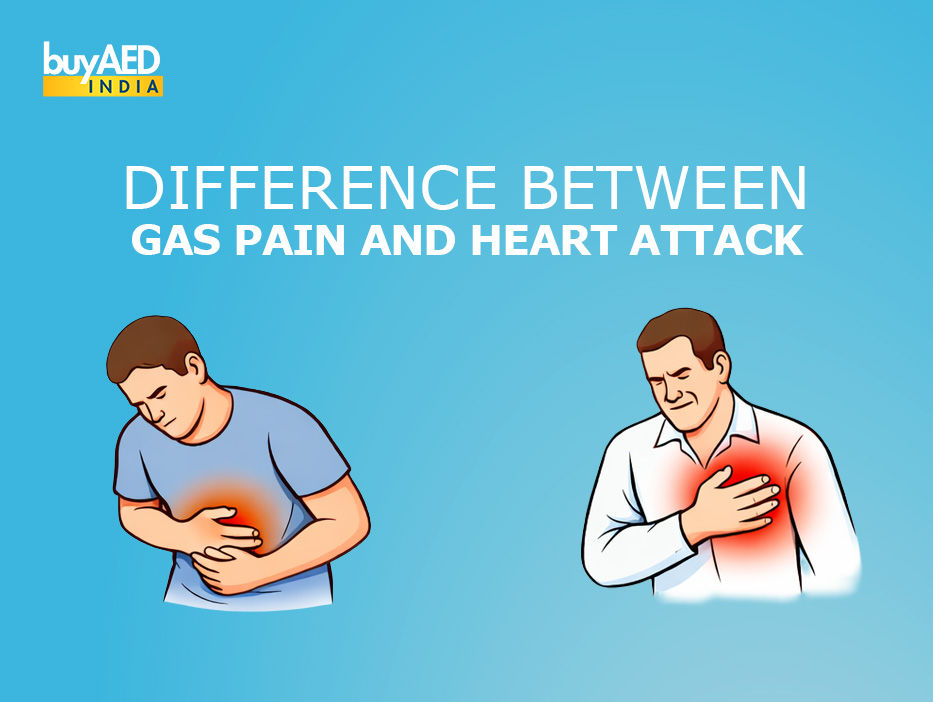
It is a scenario many of us have faced: a sharp, sudden discomfort in the chest after a heavy meal.
Is it just that extra spicy samosa, or is it something more sinister?
In India, where spicy diets and high-stress lifestyles coexist, the confusion between gas pain and a heart attack is incredibly common.
Mistaking a heart attack for simple indigestion is one of the leading reasons for delayed medical treatment.
On the other hand, the anxiety of thinking gas pain is a heart attack can cause unnecessary panic.
Because a heart attack can rapidly escalate into a sudden cardiac arrest, having an Automated External Defibrillator (AED) on-site is an absolute necessity.
It serves as the ultimate fail-safe, ensuring that if a suspected "gas issue" leads to a sudden collapse, you have the technology required to save a life immediately.
At Buy AED India, we believe that clarity is the first step toward safety.
Understanding how to distinguish between "bubbles" and "blockages" can save you from a fatal mistake, and having the right life-saving technology nearby ensures you are prepared for whichever one it turns out to be.
Side-by-Side Comparison Overview
When you are feeling pain, you need answers fast. Here is a quick breakdown of how these two sensations typically behave:
Feature | Gas Pain (Indigestion) | Heart Attack |
Type of Pain | Sharp, stabbing, or "jabbing." | Heavy pressure, "squeezing," or tightness. |
Location | Often shifts around; can be felt in the abdomen. | Centered in the chest; may spread to the left arm, neck, or jaw. |
Duration | Usually short-lived or eased with movement/burping. | Persistent; does not go away with rest or position changes. |
Associated Signs | Bloating, burping, or an acidic taste in the mouth. | Cold sweats, nausea, and shortness of breath. |
The "Movement" Test: If the pain gets worse when you move your body or touch the chest area, it is more likely to be muscular or gas-related.
If the pain stays the same whether you are sitting still or moving, it is more likely to be heart-related.
Why Can Gas Feel Like a Heart Attack?

The human body is complex, and the nerves that carry signals from the stomach and the heart often travel along the same pathways to the brain
.
This "crosstalk" is why trapped gas can feel terrifyingly similar to cardiac distress.
The Upward Pressure: When gas builds up in the stomach or the "splenic flexure" (a bend in the colon), it can push against the diaphragm. This pressure can cause a tight, restricted feeling in the lower chest that mimics the "heaviness" of a heart attack.
Acid Reflux (GERD): Stomach acid escaping into the esophagus (heartburn) causes a burning sensation right behind the breastbone, the exact location where many heart attacks originate.
The Anxiety Loop: Once a person feels chest discomfort, they often begin to panic. This panic releases adrenaline, which increases the heart rate and can cause shortness of breath, further blurring the line between a digestive issue and a cardiac event.
While gas is uncomfortable, it is never fatal. A heart attack, however, is a ticking clock.
Because it is so difficult to tell the difference in the heat of the moment, the safest approach is always to treat chest pain with the highest level of caution.
Red Flags: When It’s Definitely Your Heart

While gas and heart attacks share some "chest real estate," there are specific red flags that gas simply cannot produce.
If you or someone near you experiences these, stop wondering and start acting:
Radiating Pain: Gas pain stays mostly in the torso. If the pain travels or "shoots" into your left arm, jaw, neck, or back, it is a classic sign of a heart attack.
The "Cold Sweat": If you are breaking into a cold, clammy sweat (diaphoresis) while sitting still, your heart is likely struggling. Gas does not cause a sudden cold sweat.
Shortness of Breath: If you feel like you can't catch your breath even though you aren't exerting yourself, it indicates the heart isn't pumping blood efficiently to the lungs.
Unusual Fatigue or Nausea: Especially in women, heart attacks often present as sudden, extreme exhaustion or "flu-like" nausea rather than the typical crushing chest pain.
If these symptoms appear, the situation has moved beyond "indigestion."
This is the moment where having an AED from Buy AED India nearby becomes your ultimate insurance policy.
If that chest pain leads to a sudden collapse, an AED is the only device that can save a life.
The Danger of the "Just Gas" Assumption

In India, "it's just gas" is perhaps the most dangerous phrase in our medical vocabulary.
Because symptoms of acidity and indigestion are so common in our culture, we tend to downplay chest discomfort. However, this assumption creates a fatal delay.
The Loss of the Golden Hour
When someone assumes a heart attack is gas, they might spend hours drinking antacids or waiting for a burp.
During this time, heart muscle is actively dying. By the time they realize it’s a cardiac event, the window for successful treatment has often closed.
The Silent Transition
As we discussed in our previous blogs, a heart attack (the blockage) can rapidly trigger a cardiac arrest (the electrical shutdown).
What starts as "chest discomfort" can turn into a total collapse in seconds.
High-Risk Groups
If you have diabetes, high blood pressure, or a family history of heart disease, your "threshold of suspicion" should be much lower.
For these individuals, any new chest pain should be treated as a cardiac emergency until proven otherwise by a doctor.
Ignoring the warning signs doesn't make the problem go away; it only makes the outcome worse.
It is always better to have a "false alarm" at the hospital than to ignore a real emergency at home.
Why an AED Is the Ultimate "Safety First" Tool?
The uncertainty of chest pain is exactly why having an AED from Buy AED India is necessary for homes and residential societies.
An AED acts as your "failsafe." You don't need to be a cardiologist to use it.
If someone collapses from what they thought was "gas pain," you simply apply the AED pads.
The device is smart enough to:
Analyze the Heart: It will tell you if the heart is in a fatal rhythm.
Prevent Mistakes: If the person is just having gas pain or a standard heart attack where the heart is still beating, the AED will not deliver a shock.
Provide Instructions: It guides you through the entire process, keeping you calm during the most stressful minutes of your life.
Having an AED on-site removes the guesswork when every second counts. It ensures that even if you made the wrong guess about the "gas," you have the right tool to fix the heart.
Best Value AEDs for Homes and Offices
When you aren't sure if chest pain is a minor digestive issue or a major cardiac event, having an AED nearby provides the ultimate peace of mind.
Here are the most reliable and user-friendly models available at Buy AED India, perfect for residential complexes, private homes, and workplaces.
Product Name | Price (Inc. Taxes) | Warranty |
₹61,000.00 | 3 Years | |
₹89,000.00 | 5 Years | |
₹90,000.00 | 3 Years | |
₹99,000.00 | 5 Years | |
₹99,999.00 (Sale) | 5 Years | |
₹120,000.00 (Sale) | 5 Years | |
₹135,001.00 (Sale) | 7 Years | |
₹264,575.00 | 5 Years | |
₹450,000.00 (Sale) | 5 Years |
Disclaimer:
Prices listed above are indicative and inclusive of applicable taxes at the time of writing.
Product prices, discounts, and availability may change without prior notice due to market conditions, manufacturer updates, or promotional offers.
For the most current pricing and specifications, it is recommended to check the official Buy AED India website before making a purchase decision.
Why Shop from Buy AED India?
Certified Products: All machines are CE/FDA certified, ensuring maximum safety.
Nationwide Delivery: We offer free shipping to every city in India.
Comprehensive Support: Most units come with a 5-year manufacturer warranty and are designed for rapid use by laypersons.
User-Friendly: These devices use clear voice prompts to guide you, making them ideal for high-stress situations.
Conclusion
The thin line between gas pain and a heart attack is where many tragedies occur.
Because the symptoms overlap so significantly, assuming "it’s just gas" is a gamble with your life.
While indigestion is a temporary discomfort, a heart attack is a long-term emergency that can lead to sudden cardiac arrest in a matter of seconds.
In a country like India, where medical help can be delayed by distance and traffic, you cannot afford to wait and see.
Equipping your home or office with a certified defibrillator from Buy AED India removes the dangerous guesswork from the equation.
An Automated External Defibrillator (AED) provides a high-tech safety net, ensuring that if chest pain turns into a sudden collapse, you have the immediate means to respond.
It is always better to be overprepared for a false alarm than to be under-equipped for a real emergency.
Protect your loved ones by making your space heart-safe today.
Frequently Asked Questions
Can gas pain actually cause chest tightness?
Yes, trapped gas in the stomach or esophagus can create pressure that feels like a heavy weight or tightness in the chest area.
Will an antacid help if it’s a heart attack?
No. If the pain is heart-related, antacids will have no effect. If pain persists after taking medication, seek emergency help immediately.
How long does gas pain usually last?
Gas pain is typically transient or shifts when you move or burp. Heart attack pain is persistent and often worsens over time.
Does heart attack pain always happen on the left side?
Not necessarily. Heart attack pain is often felt in the center of the chest and can radiate to the jaw, neck, back, or both arms.
Why does a heart attack make you sweat?
When the heart struggles to pump, the body's "fight or flight" system activates, leading to a sudden, cold, and clammy sweat.
Is it safe to use an AED if I’m not sure it’s a heart attack?
Yes. The AED will only deliver a shock if it detects a life-threatening electrical rhythm. It will not harm someone with simple gas pain.
What is the "Golden Hour"?
It is the first 60 minutes after heart attack symptoms begin. Getting medical help within this window significantly increases the chances of survival and full recovery.


Comments