

Difference between a Heart Attack and Cardiac Arrest

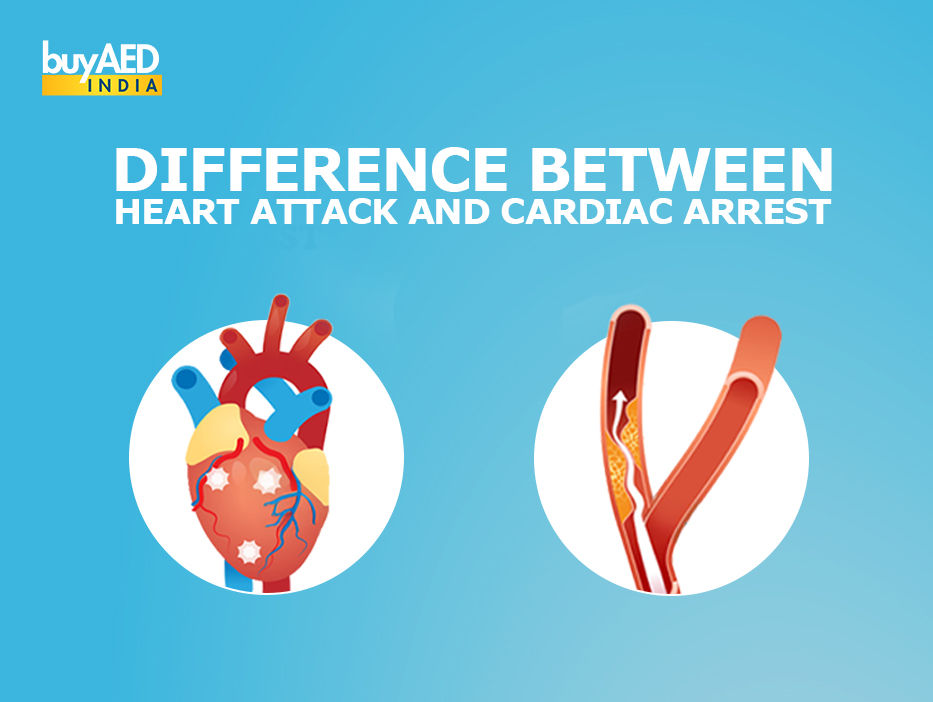
Many people in India use the terms "heart attack" and "cardiac arrest" as if they mean the same thing.
From a safety and awareness standpoint, this confusion can be risky.
Both are serious heart-related emergencies, but they are not the same condition, and they require different responses.
A heart attack is related to a blockage in blood flow, while cardiac arrest is an electrical failure that causes the heart to stop suddenly.
Understanding this difference is critical for offices, schools, gyms, housing societies, and public spaces where quick decisions can save lives.
This topic matters because timely action, correct first aid, and the right emergency equipment, such as CPR and a defibrillator (AED), can significantly improve survival outcomes.
Clear awareness leads to better preparedness and safer environments.
What Is a Heart Attack?
A heart attack happens when blood flows to a part of the heart muscle that is blocked.
This blockage is usually caused by fat, cholesterol, or plaque buildup in arteries.
When blood cannot reach the heart muscle, that part of the heart starts getting damaged.
Key points to understand:
A heart attack is a circulation problem, not an electrical failure
The heart usually does not stop immediately during a heart attack
Symptoms can build up slowly or appear suddenly
The person is often conscious and responsive at the start
Common signs include chest pain, pressure, discomfort in the arm or jaw, sweating, nausea, and shortness of breath.
In India, delayed medical attention is a major risk factor. Quick hospital care can reduce damage, but early recognition is the first critical step.
What Is Cardiac Arrest?
Cardiac arrest is a sudden condition where the heart completely stops pumping blood due to an electrical failure.
When this happens, blood flow to the brain and other vital organs stops instantly.
The person collapses, loses consciousness, and will die within minutes if no action is taken.
Key points to understand clearly:
Cardiac arrest is caused by a disturbance in the heart’s electrical system
The most common rhythm is ventricular fibrillation, where the heart quivers instead of pumping
The person becomes unresponsive and stops breathing normally
There is no pulse during cardiac arrest
Cardiac arrest can happen to anyone, including young people and those with no known heart disease. It can occur in gyms, offices, schools, homes, or public places in India.
The only effective immediate treatment is CPR combined with an AED. An AED delivers an electric shock that can restore a normal heart rhythm.
Ambulance arrival alone is often too late without early defibrillation, which is why AED access is critical.
Key Differences Between Heart Attack and Cardiac Arrest
Heart attack and cardiac arrest are often confused, but they differ in cause, symptoms, urgency, and response.
Understanding these differences is essential for correct emergency action in Indian settings because:
Heart Attack: Happens due to a blocked artery that prevents blood from reaching the heart muscle
Cardiac Arrest: Caused by a sudden electrical failure that stops the heart from beating
Heart Function During the Event
Heart Attack: The heart usually continues beating, though inefficiently
Cardiac Arrest: The heart stops pumping blood completely
Onset and Warning Signs
Heart Attack: May show warning signs like chest pain, discomfort, fatigue, or breathlessness
Cardiac Arrest: Often strikes without warning, causing collapse
Consciousness
Heart Attack: Person is usually awake and responsive
Cardiac Arrest: Person becomes unconscious immediately
Breathing and Pulse
Heart Attack: Breathing and pulse are usually present
Cardiac Arrest: No normal breathing and no detectable pulse
Immediate Response Needed
Heart Attack: Call emergency services and get medical help urgently
Cardiac Arrest: Start CPR immediately and use an AED if available
In Indian workplaces and public areas, recognizing these differences can mean the difference between life and death.
Warning Signs to Watch For Heart Attack & Cardiac Arrest
Understanding the warning signs of both heart attack and cardiac arrest is critical because the speed and type of response can determine survival.
In many Indian homes, offices, gyms, and public places, people miss early signs due to lack of awareness, leading to delayed action.
Warning Signs of a Heart Attack:

A heart attack often provides signals before becoming life-threatening. These symptoms can vary based on age, gender, and overall health.
Persistent chest pain or pressure, often described as heaviness or squeezing
Pain spreading to the left arm, shoulder, neck, jaw, or upper back
Shortness of breath, even without physical activity
Cold sweats, nausea, vomiting, or dizziness
Extreme fatigue or weakness, especially common in women and older adults
Heart attack symptoms may come and go. Ignoring mild or unusual signs is a common mistake in India. Early hospital treatment can limit heart damage.
Warning Signs of Cardiac Arrest:

Cardiac arrest usually occurs without prior symptoms and escalates instantly.
Collapse
Loss of consciousness
No normal breathing or only occasional gasping
No detectable pulse
Cardiac arrest requires immediate CPR and AED use. Waiting for an ambulance without intervention greatly reduces survival chances.
Immediate Actions During Heart Attack vs Cardiac Arrest
Knowing the correct steps to take during a cardiac event is essential to save lives. While both conditions affect the heart, the response strategies differ significantly.
Immediate Actions for a Heart Attack

Call Emergency Services Immediately: Dial 108 (ambulance) or local emergency numbers. Early medical intervention can prevent severe heart damage.
Keep the Person Calm: Have them sit or lie down in a comfortable position to reduce strain on the heart.
Administer Aspirin (if advised): For adults, chewing a 75–150 mg aspirin tablet can help prevent further blood clotting, but only if the person is not allergic.
Avoid Physical Activity: Do not let the person walk or exert themselves. Movement increases the heart’s workload.
Monitor Vital Signs: Check pulse and breathing until help arrives.
Immediate Actions for Cardiac Arrest

Call Emergency Services Immediately: Time is critical; every minute without CPR reduces survival by 7–10%.
Start CPR immediately: Push hard and fast in the center of the chest at 100–120 compressions per minute. Allow full chest recoil between compressions.
Use an AED: Deploy an automated external defibrillator as soon as it is available. Follow voice prompts for shock delivery.
Continue Until Help Arrives: Do not stop CPR until trained personnel take over or the person shows signs of life.
Understanding these distinctions ensures rapid, life-saving interventions in Indian homes, schools, offices, or public spaces.
Why Quick Response Matters & Survival Rates?
Time is the most critical factor during both heart attacks and cardiac arrests. Immediate action dramatically improves survival outcomes and reduces long-term complications.
Heart Attack:
Prompt medical attention can restore blood flow to the heart, minimizing tissue damage.
Studies show that receiving treatment within the first hour, known as the “golden hour,” can reduce mortality by up to 40%.
Delays may lead to heart failure, arrhythmias, or permanent cardiac damage, making recovery longer and more complicated.
Cardiac Arrest:
Brain cells begin dying within 4–6 minutes without oxygen, so rapid CPR and AED use are essential.
Each minute of delay in defibrillation reduces survival chances by 7–10%.
With immediate CPR and AED intervention, survival rates can increase to 50–70%, even in public settings.
Key Takeaway:
For both conditions, early recognition and rapid response are the difference between life and death.
Businesses, schools, and homes equipped with AEDs and trained personnel can significantly improve survival rates during sudden cardiac events.
The Role of AEDs in Saving Lives During Cardiac Arrest
Sometimes, a heart attack can lead to sudden cardiac arrest (SCA), a life-threatening condition where the heart stops beating abruptly.
In such situations, CPR alone is often not enough to save a life. This is where an Automated External Defibrillator (AED) becomes crucial.
An AED is a portable medical device that delivers a controlled electric shock to restore a normal heart rhythm.
Without defibrillation, survival chances decrease by nearly 10 percent per minute, highlighting the critical importance of having AEDs easily accessible in homes, offices, gyms, schools, and public spaces across India.
Currently, several reliable and user-friendly AEDs are available for use even by non-medical individuals:
These devices feature clear voice prompts, visual instructions, and built-in safety mechanisms, making them effective during emergencies.
Wider adoption of AEDs in India can save countless lives by enabling immediate action before professional medical help arrives.
Why Buy AED India Is the Ideal Choice for Cardiac Safety?
In cardiac emergencies, every second is critical.
Having immediate access to reliable AEDs can mean the difference between life and death.
Selecting the right provider is therefore essential, and Buy AED India has emerged as a trusted partner for cardiac safety.
Here’s why homes, offices, and institutions across India prefer Buy AED India:
Extensive Range of AEDs: From compact units for home use to advanced models for hospitals, schools, gyms, and corporate offices, Buy AED India provides options for every environment.
Transparent and Affordable Pricing: AEDs are offered at competitive rates in India, with no hidden charges.
Globally Certified Quality: All devices meet international safety and performance standards, ensuring reliability in emergencies.
Nationwide Delivery and Installation: Professional support and timely delivery are available across India.
Training and Maintenance Guidance: Users receive step-by-step assistance for correct AED operation and long-term maintenance.
Choosing Buy AED India is more than buying a medical device; it’s an investment in preparedness, peace of mind, and life-saving protection.
With the right AED in place, you ensure that when every second counts, you’re fully prepared to act.
Key Features of AEDs Available from Buy AED India
Buy AED India offers devices designed for ease of use, safety, and effectiveness during cardiac emergencies.
Here are the key features that make these AEDs suitable for Indian homes, offices, gyms, schools, and public spaces:
Clear Voice Prompts: Every AED provides step-by-step audio instructions, guiding users through CPR and defibrillation even under stress.
Visual Instructions: Screen displays or indicator lights show pad placement and operational status, ensuring correct use.
Child and Adult Compatibility: Many AEDs come with pediatric pads or child-mode settings for safe use on children.
Automatic and Semi-Automatic Options: Devices can deliver shocks automatically or after user confirmation, allowing flexibility based on the rescuer’s comfort.
CPR Feedback: Some models, like Zoll AED Plus, provide real-time feedback on compression depth and rate to enhance the quality of CPR.
Portable and Lightweight: Compact designs allow AEDs to be easily moved across large spaces or carried to emergency sites.
Long Battery and Pad Life: AEDs from Buy AED India come with long-lasting batteries and electrode pads, always ensuring readiness.
Strong and Reliable: Many models are built to withstand dust, moisture, and temperature extremes, suitable for diverse Indian environments.
Self-Testing Feature: AEDs perform regular self-checks, alerting users to any issues, so the device is always ready.
These features ensure that anyone, from trained staff to family members, can respond effectively in life-threatening cardiac emergencies.
Why Awareness Matters for Homes, Offices, and Public Places: Safety Preparedness and Risk Reduction?
Awareness about cardiac emergencies and the role of AEDs is a crucial aspect of safety in homes, offices, and public spaces.
Being prepared not only saves lives but also reduces panic and ensures a structured response when seconds count. Here’s why it matters:
Early Recognition of Cardiac Arrest: Knowing the warning signs, such as collapse, loss of consciousness, or irregular heartbeat, enables bystanders to act immediately, rather than waiting for professional help.
Quick Access to AEDs: Awareness ensures people know where AEDs are located, how to operate them, and when to use them. In high-traffic places like offices, gyms, or apartment complexes, this knowledge can prevent critical delays.
Confidence During Emergencies: Training and awareness programs teach staff, family members, and residents to respond calmly, reducing chaos and increasing the likelihood of survival.
Integration with CPR Knowledge: Understanding the combined use of CPR and AEDs ensures that initial resuscitation efforts are effective until professional medical help arrives.
Risk Reduction in Public Spaces: In India, where ambulance response times can vary, awareness in schools, workplaces, and housing societies ensures a safety net for residents, employees, and visitors.
Promoting a Safety Culture: Regular drills, workshops, and signage promote a proactive approach to health emergencies, encouraging people to act rather than hesitate in critical situations.
Conclusion
Cardiac emergencies can strike unexpectedly, whether at home, in offices, or in public spaces.
The difference between life and death often hinges on awareness, immediate action, and access to lifesaving tools like AEDs.
By understanding warning signs, ensuring defibrillator (AED) availability, and combining their use with CPR, families, employees, and the public can dramatically improve survival chances.
Investing in reliable defibrillators (AEDs) from trusted suppliers such as Buy AED India not only provides high-quality, certified devices but also comes with guidance on proper use and maintenance.
Regular training, drills, and preparedness cultivate confidence, reduce panic, and create a safety-conscious environment.
Ultimately, creating a culture of cardiac safety ensures that when emergencies occur, individuals are ready to act swiftly and decisively, protecting lives before professional medical help arrives.
FAQs
1. What is the difference between a heart attack and cardiac arrest?
A heart attack is caused by blocked blood flow to the heart, whereas cardiac arrest occurs when the heart suddenly stops beating.
2. Can anyone use an AED?
Yes, AEDs are designed for laypersons and provide voice and visual prompts for guidance.
3. How quickly should an AED be used?
Immediate use is critical; survival chances decrease about 10% per minute without defibrillation.
4. Do homes and offices in India legally need AEDs?
AEDs are not mandatory in most places, but installing them is strongly recommended for safety.
5. How often should AEDs be maintained?
Check battery life, pads, and device readiness regularly; most AEDs perform self-tests automatically.
6. Why choose Buy AED India?
They provide certified AEDs, nationwide delivery, training guidance, and ongoing support for homes, offices, and public spaces.


Comments